Beyond the Big Screen: Mastering the Programmatic Shift into CTV and PDOOH
Experts from Tangoo, Adlook, PubMatic, and Google share insights on how brands can thrive in today’s fragmented, multi-screen advertising landscape.
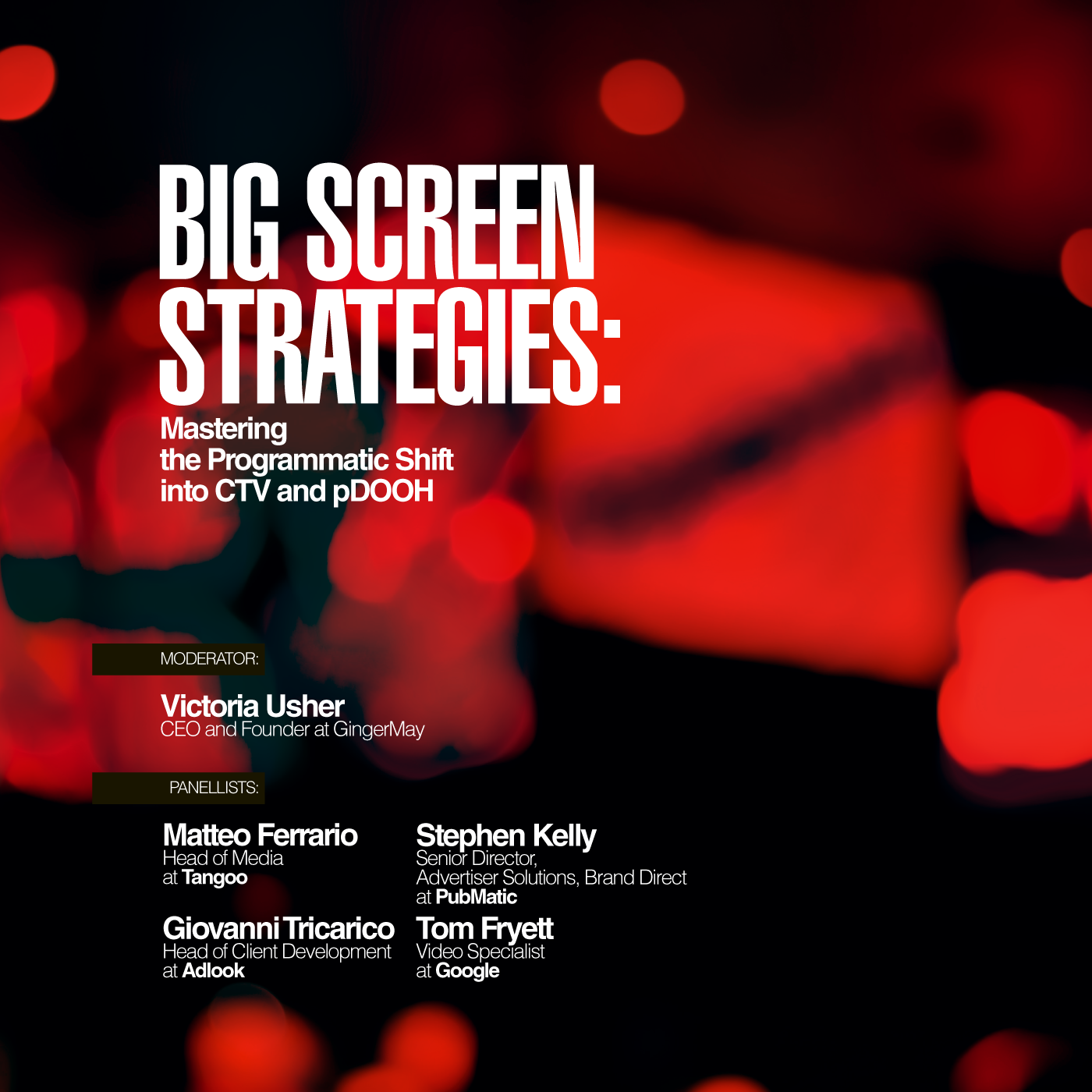


Beyond the Big Screen: Mastering the Programmatic Shift into CTV and PDOOH
The digital advertising landscape is no longer a linear journey. As audiences fragment across devices, the traditional "funnel" is under pressure from shifting consumer habits and emerging technologies. At our recent panel in London, experts from Tangoo, Adlook, PubMatic, and Google sat down to dissect the latest research and share how brands can navigate this multi-screen reality.
The Battle for Awareness: CTV vs. Social
Research conducted by Tangoo with Censuswide reveals that social media leads brand awareness at the top of the funnel (52%), followed closely by streaming at 47%.
Tom Fryett (Google) believes CTV is poised to regain the top spot. However, the secret isn't just choosing one channel over another; it’s about creative ownership. Tom noted that viewers are increasingly watching vertical "Shorts" on their TV screens, usage that has doubled in the past year. The challenge for brands is to design creative that "owns the real estate" of the 16x9 screen while remaining adaptable for various formats.
Matteo Ferrario (Tangoo) added that it isn't a "war" between channels, but rather a strategic choice of what kind of awareness a brand wants to deliver: incremental reach via social or high memorability via the big screen.
The Surprising Resilience of "Outdated" Banners
While video is a powerhouse for consideration, inspiring 39% of consumers to take action, banner ads influenced a surprising 28%.
Giovanni Tricarico (Adlook) argues that banners are only outdated if you use outdated strategies. By moving from static images to rich, engaging media and overlaying attention magnets, banners can still cut through the noise. Stephen Kelly (PubMatic) noted that banners serve a "compounding" role, following users who have shown interest and providing a constant route to re-engage with a brand after they have seen a video.
Personalization: Relevancy Without the "Creep" Factor
With 60% of consumers feeling ads haven't improved in relevance despite years of industry effort, personalization is no longer optional. However, there is a fine line between helpful and "scary".
Matteo Ferrario suggested focusing on Buyer Personas rather than hyper-specific personal data. For example, an Internet Service Provider (ISP) should tailor different creative messages for gamers, remote workers, and budget-conscious switchers, the same service, but three distinct conversations.
"If you don't do personalization today... you're probably doing something wrong." - Giovanni Tricarico.
Is the Marketing Funnel Still Fit for Purpose?
The consensus? The traditional funnel remains a vital communication framework, but it is no longer a linear path.
AI is making the discovery phase "chaotic". A consumer might go from zero awareness to a purchase in seconds on social media, or discover products via AI-powered search overviews and chatbots. Matteo emphasized that while we use the funnel to plan budgets and coordinate teams, we must rethink it during execution to account for these non-linear behaviors.
2026 Predictions: What’s Next?
To wrap up, our panelists shared their "ones to watch" for the coming year:
- Retail Media Attribution: Matteo predicts that 2026 will be the year marketers solve the attribution challenges of retail media as it expands into CTV and DOOH.
- The End of Silos: Tom expects the "school disco" environment, where TV buyers and programmatic teams stand on opposite sides of the room, to end as silos finally break down for holistic AV planning.
- AI Agents: Stephen highlighted the rise of AI "agents" or "little helpers" that will handle the busy work of campaign management, allowing marketers to focus on higher-level strategy.
- CTV Outcomes: Giovanni expects a shift toward measuring richer outcomes on CTV, such as cross-partner reach and the influence of big-screen ads on website visits.